
AI Took the Job Below Mine. Here’s What I’m Doing About It.
This is Part 2. If you haven't read Part 1, start there: AI Will Not Take Your Marketing Job. It Already Took the One Below Yours.
In Part 1, I wrote about what I think is actually happening with AI and marketing jobs. The short version: the institutional narrative and the ground-level anxiety are both partially right, the data is more uncomfortable than most people are willing to say out loud, and the efficiency gains that were promised are not showing up at scale.
This part is more personal. It’s about what I’m doing in response, and what I think other marketers, at any level, can take from it.
The first thing I changed was what I let in. I have become much more deliberate about what I read, who I follow, and what I actually learn from versus what I just scroll past.
There is so much noise right now that the act of choosing what to pay attention to has itself become a skill.
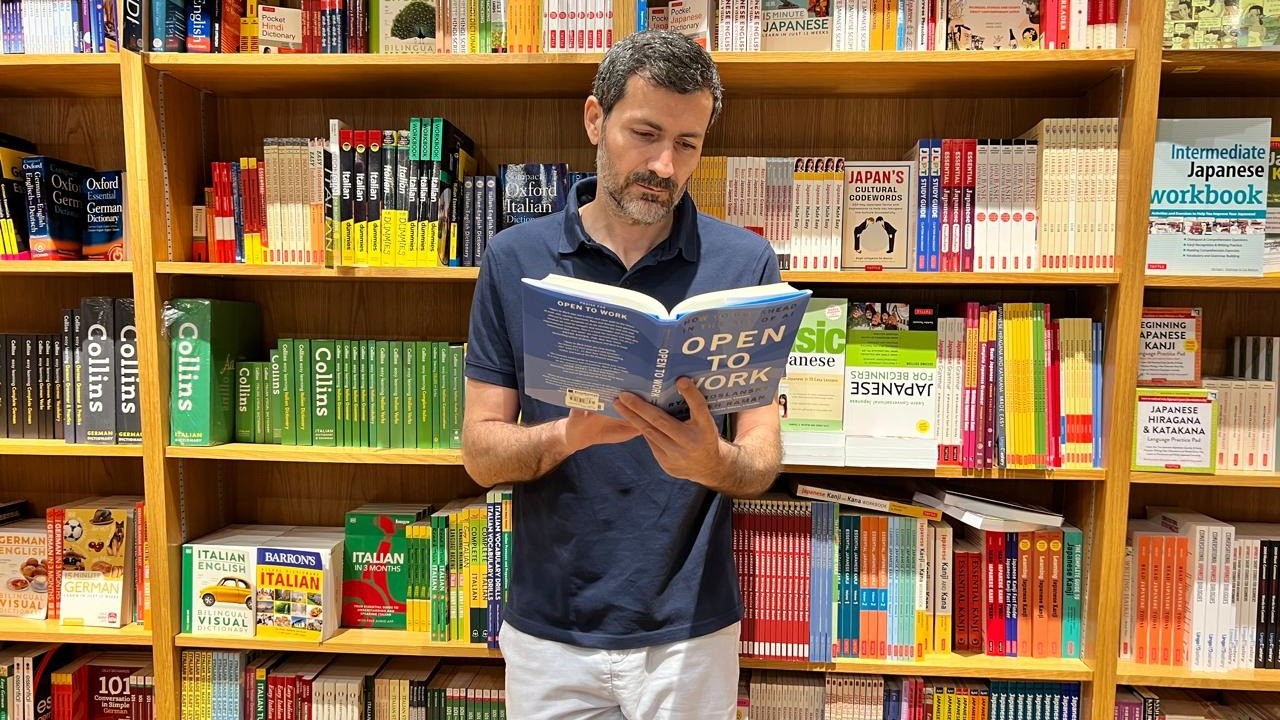
Reading Open to Work by Aneesh Raman and Ryan Roslansky reinforced something I found genuinely useful: your job is not really a job title. It’s a collection of tasks, and a significant portion of those tasks will change whether you move jobs or not. The question is whether you are the one who decides how that change happens, or whether it just happens to you. They talk about the 5Cs: Curiosity, Courage, Creativity, Compassion and Communication. I would add a sixth: Credibility. Because in an environment where anyone can generate content and anyone can look like they know what they are talking about, the thing that actually separates people is whether they have been through enough to have the right to an opinion.
From there, I stopped auditing my tools and started auditing my judgment.
Every marketing conference right now has a session on which AI tools to use. I want to see the session on what good marketing judgment actually looks like, how I could develop it further, and how I can demonstrate it when the executional work is increasingly automated. That, to me, is the gap most in need of closing.
The marketers who are not replaceable are the ones who can look at an AI-generated campaign concept and tell you, without needing a dashboard, why it will fall flat with a particular audience, in a particular cultural context. That instinct takes years to build, so if you are earlier in your career, please don’t skip that formation by delegating to AI too quickly, learn the craft, then automate it.
That shift also changed how I talk to prospects about what a senior marketer actually is.
A senior marketer today is someone with sound judgement who can operate as a lean strategic unit, setting direction for a team that uses AI for execution. It’s also someone who understands that communication is among the most valuable skills in this environment, because no AI does it with any consistency: leading a difficult stakeholder conversation, making a brand call that requires cultural nuance, building trust with a client over time, or navigating cross-departmental legacy systems that have been undergoing ‘transformation’ for longer than I can remember.
And then, eventually, I just took the first step.
I went through the paralysis, going through tools moving faster than I could track, getting contradictory advice and real anxiety, so I started narrow: I took one task that consumed a disproportionate amount of my time, finding out whether AI could handle parts of it well enough to free me for the work that actually needs a pair of eyes and a brain. Then I did it again with another task, and again.. without ever having had a ‘transformation strategy.’ The step is the strategy.
And I take my cues from the people around me, not from tools. The best work we do as marketers is made with others, shaped and improved by others, that hasn’t changed and I don’t think it ever will.
Everyone right now is racing to become more AI-literate. I get it, but the skill that will actually separate marketers over the next few years is the ability to work with other people, to build trust and to lead conversations that produce insights no dataset can predict.
The credibility that comes from being the person who has seen enough, got enough wrong, and learned enough to be worth listening to is not something you can automate. Find what works for you by building it, by taking that first step, and the one that follows, by trying, failing, and trying again.
The roles that require real strategic judgement, emotional and cultural intelligence, and human trust are not going anywhere, because the people who hold those roles keep choosing to get better, to show up and to do the work that brings you the kind of credibility no tool can replicate.
Sources
Open to Work: How to Get Ahead in the Age of AI by Ryan Roslansky & Aneesh Raman
Deloitte’s State of AI in the Enterprise https://www.deloitte.com/us/en/what-we-do/capabilities/applied-artificial-intelligence/content/state-of-ai-in-the-enterprise.html
Marketing Dive, 9 Marketing Predictions for 2026 as AI Fuels Polarity https://www.marketingdive.com/news/marketing-predictions-for-2026/809124/