
The Quiet Trade Infrastructure That's Worthy of a Wider Audience.
Mubadala’s US$300 million investment partnering with Stonepeak for Textainer’s acquisition of Seaco could be read as a financial transaction in a specialist corner of shipping. The numbers are large, the assets are physical, and the subject matter sits far from the language of brand visibility, yet it's quite important, because it represents the kind of infrastructure investment that supports the functioning of global trade without making headlines.
The combined Textainer/Seaco platform brings together more than eight million cost equivalent units (CEU) of container capacity, with Stonepeak putting the fleet at circa 8.3 million CEU after the acquisition. This positions the combined platform as the world's largest container leasing operation on a CEU basis, according to Stonepeak, in a market historically led by Triton, with wider inventory, more depot coverage and stronger service capability across international trade routes, particularly in Asia.
For shipping lines, this kind of scale is attractive, as a carrier’s ability to access the right container type in the right location at the right time directly affects schedule reliability, equipment turnaround and imbalance costs. When leasing platforms have broader geographic reach and deeper fleet diversity, carriers gain more flexibility in how they plan equipment across their networks, and that flexibility feeds into reliability.
Making the invisible visible
In this industry, ports, ships, cranes are clearly visible, containers are visible in the aggregate, but container leasing sits further behind the scenes. Yet it’s one of the mechanisms that gives carriers access to equipment without tying up unnecessary capital in owned fleet.
So how do we explain the value of an asset that works best when nobody has to think about it?
The answer is to connect the operating detail to the promise every economy and every business depends on: availability, delivery certainty and confidence in the movement of goods.
When examining the transaction more closely, we realise that the investment goes beyond scale for scale’s sake by giving shipping lines access to a broader equipment platform in a market where route patterns, demand cycles and supply chain planning continue to shift and where major trades like the Transpacific and Asia-Europe and are always imbalanced. A larger and more diversified leasing platform can also help reduce the need for carriers to reposition empties, one of the industry’s most persistent cost and efficiency challenges.
The UAE perspective
The transaction reinforces Abu Dhabi’s position as a long term capital allocator into global trade infrastructure. The UAE has identified transport and logistics as one of the priority sectors in its National Investment Strategy 2031, while it continues to position trade and logistics as a growth sector supported by geography, port infrastructure, airports and connectivity. Mubadala’s role, in that context, extends beyond domestic assets; it places Abu Dhabi capital into the physical systems that enable trade to move internationally.
This is particularly important because the UAE’s trade story is often told through ports, aviation, industrial and re-export activity. This deal adds another layer to the narrative and shows the UAE participating in the equipment backbone of global commerce, not only the nodes where cargo is handled, and for a market that’s building its trade credentials with intent, this is a credible extension of the story.
Connecting the story to the operating reality
Too often in this industry, the value of trade infrastructure only gets explained at the moment of disruption, when a port is congested, freight rates spike or a shipment misses its window. By then, the audience is already frustrated and the language of explanation starts to sound defensive. The quiet infrastructure behind global trade is worthy of a story that’s told before the pressure arrives, one that the public and the wider community can understand and connect with.
Mubadala’s investment with Stonepeak gives a clean example of how that story comes together. It touches sovereign capital, logistics equipment, global shipping, Transpac and Asia trade routes and the practical problem of keeping containers where customers need them. It also shows how investors are looking beyond the most visible parts of supply chains and into the asset platforms that make the wider system work.
For the wider public, the value of a transaction like this may not be immediately obvious, but it is real. It sits in the reliability of the goods people buy, in the stability of the supply chains their livelihoods depend on, and in the assumed confidence that comes from trade systems working as they should. When containers are available where they are needed, shipping lines keep their schedules, retailers keep their shelves stocked and the cost of moving goods stays closer to where it should be. That chain of consequence starts with the kind of infrastructure this deal represents, and it reaches further than most people will ever see.
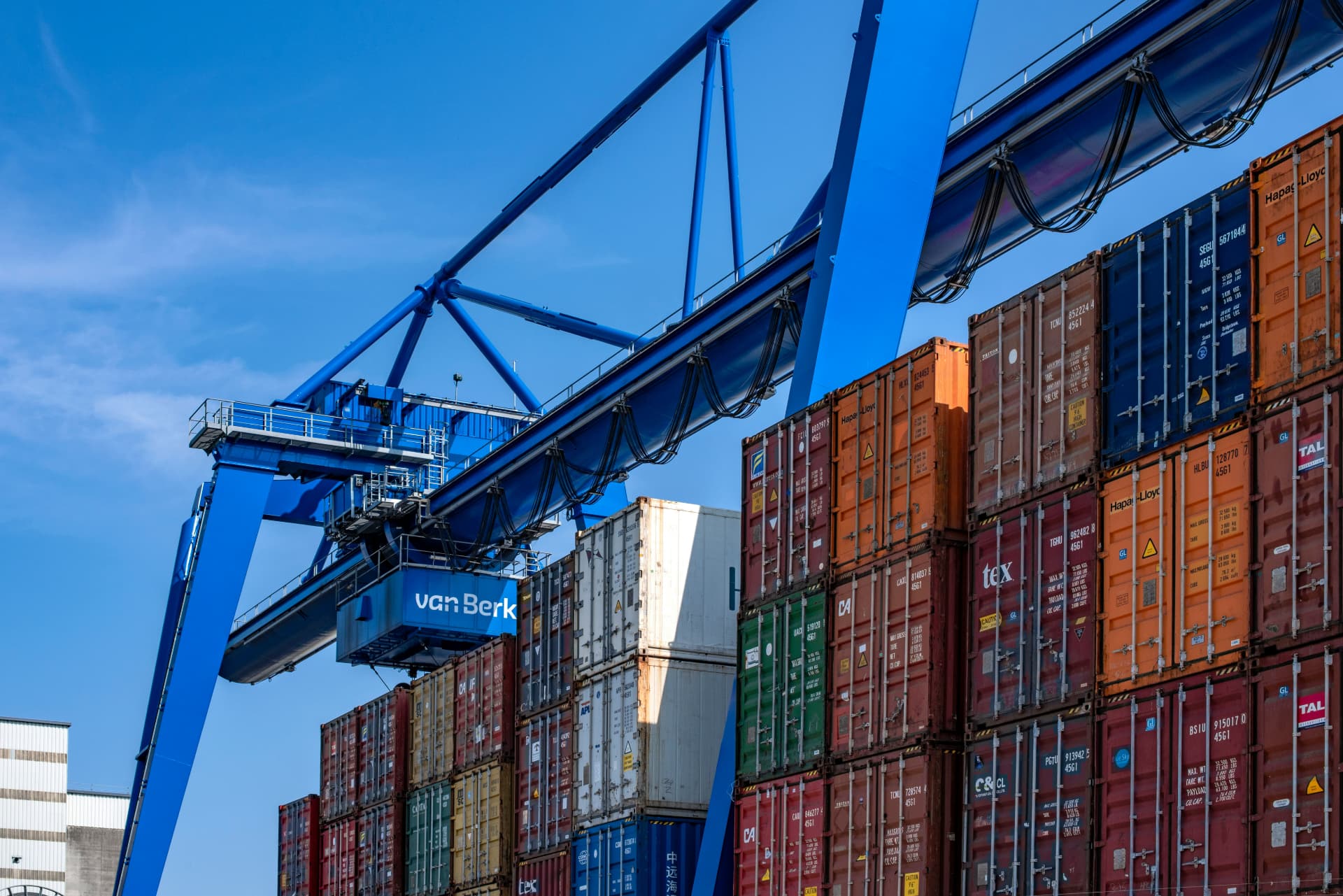
The container may look ordinary, but the infrastructure and capital behind it tell a story that most audiences have never heard, one well worth telling.
Sources
Mubadala Investment Company, Mubadala partners with Stonepeak to invest in container leasing platforms supporting global trade https://www.mubadala.com/en/news/mubadala-partners-with-stonepeak-to-invest-in-container-leasing-platforms-supporting-global-trade
Stonepeak, Textainer completes acquisition of Seaco https://stonepeak.com/news/stonepeak-portfolio-company-textainer-completes-acquisition-of-seaco
UAE Cabinet, National Investment Strategy 2031 announcement https://uaecabinet.ae/en/news/uae-cabinet-approves-national-investment-strategy-2031-national-policy-for-combating-health-risks
UN Trade and Development, Review of Maritime Transport 2025 https://unctad.org/publication/review-maritime-transport-2025