
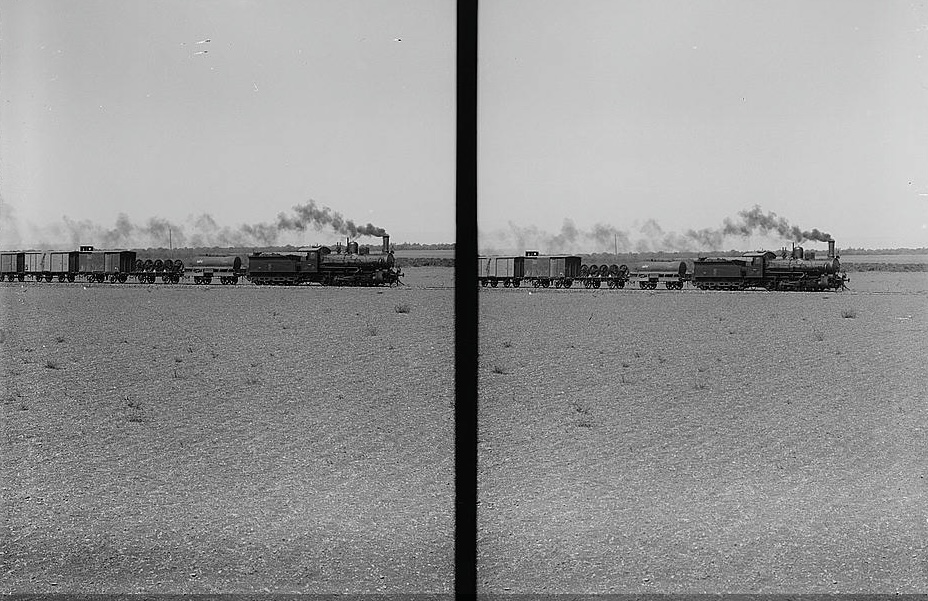
Toot Toot, ’A Trablos Before Beirut.
In trade you learn your size from the quayside. Abu Dhabi’s Khalifa Port proves it with sheer grandeur, kilometres of semi-automated berths that make you feel tiny. Antwerp and Rotterdam are maritime cities through and through; walk them and you sense the harbour came first and everything else was built around it. I carried those places up the ramp of the bullet-scarred Yellow House during my last visit home, where Beit Beirut was showing Beirut al-Marfa’. Our own port city, the one that showed this region what a harbour can make of a town, sits outside the windows in disarray.
The exhibition wasted little time on nostalgia, the old maps are commercial documents, berths deepened for a reason and customs placed where money crossed. The story they tell starts before the trains. In the 1830s, Ibrahim Pasha planted a quarantine station by the harbour, and ships bound for the hinterland were made to call at Beirut first; the obligation, as Samir Kassir wrote, helped build the city's fortune, from the district that still answers to the name 'Karantina'. That early fortune is part of why the railway age arrived; the first train left Beirut to Damascus in 1895, over the Dahr al-Baidar pass at 1,487 metres, on rack-and-pinion because our mountain allowed no gentler way. It was built on French capital to beat a British line that would have run from Haifa across flat ground and crowned it port of the Levant instead. Beirut won the race albeit temporarily; the harbour concession of 1887 and the railway of 1895 together turned a silk town into the gateway of inland Syria.
But what the Lebanese learned the hard way is that competition never rests: In 1905, the Hejaz Railway’s branch reached Haifa and pulled the Hauran grain south. The 1920 border demarcation then split the port from its Damascus market. Beirut still held the crown until the British opened Haifa’s deepwater port in 1933. Then 1948 sealed the southern access and severed the coastal line, and our civil war silenced the last of 408 km of rail track. Our port was cut off from the markets behind it and shrank to the size of its own city’s shopping list since.
The rot preceded the catastrophe of 4 Aug 2020. The port has been run since the early nineties by an interim committee never made permanent, a legal vacuum in the World Bank’s eyes. Customs evasion at the port was put near USD 1 billion a year, and the same broken customs house that let the nepotists pay nothing made everyone else pay twice; my uncle, a silversmith through the late nineties, paid double the container cost to clear his goods, late. By 2024 the port handled circa 760,000 containers, down from more than 1.2 million at the 2019 peak, and transshipment fell 28% in a year to Egyptian, Greek, Turkish and Israeli terminals whose cranes run on a national grid while ours leaned on cartel-sponsored cancer-causing diesel generators.
None of those ports will hand the traffic back out of love, and while we counted our losses, the sea was getting repriced: attacks in the Red Sea pushed the world’s carriers around the Cape of Good Hope, and the war with Iran shut the Strait of Hormuz. Even after the ceasefire, Tehran speaks of tolls. From the Gulf to the Mediterranean, the conclusion is unanimous: the region needs land routes to the sea that no one can close.
The corridors are being built at a speed the Levant hasn’t seen since the railway age. Tartus went to DP World for 30 years and USD 800 million. CMA CGM renewed Latakia for 30 years and is expanding it past a million containers in capacity. UAE and Syrian officials are sketching a Syrian-quays-to-Gulf route through Iraq, complete with dry ports and the rest of the furniture. Iraq is pouring USD 17 billion into the Development Road: 1,200 km of motorway and rail from Al Faw Grand Port on the Gulf to the Turkish border; its neighbours are being sold the project as the land answer to both Suez and Hormuz. Türkiye, Jordan, Syria and Saudi Arabia are studying the revival of the Hejaz Railway, a network whose branches once ran to Beirut; the Saudi track already reaches the Jordanian border, the missing tracks, across Syria, are being negotiated, and Saudi container trains, 400 boxes at a time, have been running to that border since March. Ankara, for its part, is doing the unglamorous work to make itself the transit platform for Syrian exports. And IMEC, announced at the 2023 G20 to link India to Europe by rail through the Middle East, reaches the Mediterranean at Haifa, on paper at least, since the money has yet to make up its mind.
Lebanon appears on none of these maps, neither as signatory nor as node when every line ends a morning’s drive from a Lebanese crossing.
Against all this stands our own announcement; in May the government signed the tender to rehabilitate the Tripoli-Abboudiyeh line, one that hasn’t carried a single wheel since 1975 despite years of advocacy from the likes of Train Train Lebanon, with studies due before year end. The railway serves Tripoli, whose port sits roughly 100 km from Homs with a CMA CGM terminal and an economic zone behind it. Beirut gets rail only in a later phase over the mountain, at a cost put near USD 3 billion that nobody’s offered to finance. The sequencing, Tripoli-Homs first, suggests someone inside the machine has done the work, and that thinking needs protecting from the plundering that typically so reliably follows it.
A standalone national railway, conceived as heritage or commuter relief, is a museum with rolling stock, admirable and unbankable, whereas a short freight link from Tripoli’s quays to the Homs junction is the cheapest project on the entire regional map that plugs a Lebanese port into almost every corridor listed above. The Homs Gap is the only natural breach in the mountain wall between our sea and the Syrian interior, and the old alignment runs straight through it, 100 km from the waterfront to the junction where Syria’s network branches to Hama, Aleppo and Damascus. A Tripoli to Homs train is a Tripoli to all of Syria service, particularly for the imminent reconstruction cargo. The non-negotiable condition is a rail protocol with Damascus; without it, the 90 borderless km from Tartus beats it, by truck today and by rail tomorrow, especially while rival terminal operators steer cargo towards their own quays to support their respective liner trades.
Syria has a railway of its own that ties Latakia and Tartus to Homs and onward to Aleppo and Damascus without crossing a single border, and pieces of it already run. Damascus has signed a memorandum to run containers from Latakia’s quay to dry ports at Hassia, Adra and Aleppo, and the day that network is whole again, a Syrian train from a Syrian quay is the benchmark Tripoli has to beat, and no agreement will argue with that logic. But running is one thing and carrying a reconstruction is another. The wagons date from the sixties and seventies, part of the network is out of service, the repair bill is in billions and the timeline in years. Rebuilding a country takes more cement, steel and grain than two ports and a heritage railway can swallow. Meanwhile, every route they are mending funnels through the same junction ours does. Homs will reward whoever reaches it first, cheapest, with the bigger ships behind them, and that’s a race Tripoli can enter.
Beirut, for once, doesn’t need the microphone. Its 16 metre quay remains rare on this coast, the natural deepwater front door of the range. Main line operators call the port, and the coastal feeder CMA CGM already runs between Beirut, Tripoli and Latakia and stitches the smaller ports into the rest of the world. A stronger Tripoli makes that loop busier, and a busier loop makes Beirut’s berths matter. The mountain settled the rest of the argument long ago: heavy freight has never climbed it in volume, so the railway to Damascus can wait for its tunnel, and Syrian-bound cargo will meanwhile reach the interior the way geography prefers, through the Homs Gap, on a train that starts in Tripoli.
What stands between us and that traffic is a hand willing to play the cards in sequence: governance first, diplomacy second, rail third, marketing last, the reverse of the order our institutions traditionally take. 1. Parliament must pass the languishing port law and seat a real landlord authority. 2. A freight and transit agreement with Damascus must be concluded. 3. Customs at both ends of the road must become boringly predictable, and 4. railway land should be promoted as public capital rather than squatting stock for nightclubs and cultural hubs.
The window is short, if the chokepoint era persists, the eastern Mediterranean will gain ports the way the nineteenth century gained railway towns, and a Lebanese gateway stitched into the Syria-Iraq-Gulf mesh collects transit rent for future generations. If we wait, subsidised trucking and renewed railway through Tartus take the Syrian hinterland whole, and Beirut becomes a port serving only its own city, in a country whose city can no longer pay for it.
Geography sets the walls of the room in which nations choose, and ours is a harboured coast whose mountain has one gate to Homs and a port at the shortest crossing between the Mediterranean and Damascus, and every generation that honoured that fact built a golden age.
We decided once that the harbour was our reason, and thankfully, the sea, more patient with us than we have ever been with ourselves, is still willing to hear the ‘toot toot’ it was promised.
Sources
L’Orient-Le Jour, Il y a 124 ans, la ligne ferroviaire Beyrouth-Damas était inaugurée https://www.lorientlejour.com/article/1182644/il-y-a-124-ans-la-ligne-ferroviaire-beyrouth-damas-etait-inauguree.html
Encyclopedia Britannica, Hejaz Railway https://www.britannica.com/topic/Hejaz-Railway
World Bank, Reforming and Rebuilding Lebanon’s Port Sector https://www.worldbank.org/en/news/press-release/2021/01/05/reforming-lebanons-port-sector-to-build-back-a-better-port-of-beirut
The Daily Star, Corruption widespread, deep-rooted at Beirut Port https://icnbeirut.com/News/2012/dailystar-13-11-12.pdf
Port of Beirut published statistics, Total TEU (In/Out/Full/Empty, Local + Transshipment) https://portdebeyrouth.com//en/Statistics
Roland Berger study, Joining forces for a new Beirut port area https://share.google/gJSM1Blp2D7FPOyHb
Beirut Urban Lab, Beyond the Grid: Exploring Municipal Beirut’s Hybrid Energy Infrastructure https://beiruturbanlab.com/en/Details/2066
DP World, Tartus 30-year concession https://www.dpworld.com/en/news/dp-world-to-develop-syrias-tartus-port-under-landmark-30-year-deal
Offshore Energy, CMA CGM Latakia expansion https://www.offshore-energy.biz/cma-cgm-switches-syrias-e200m-latakia-port-expansion-project-into-high-gear/
The National, Syria ready for proposed Iraq-Gulf transit corridor bypassing Strait of Hormuz https://www.thenationalnews.com/news/mena/2026/07/01/syria-expects-practical-steps-to-develop-transit-route-to-gulf/
Emirates Policy Center, Iraq’s Development Road Project: Geo-Political and Economic Implications and Prospects of Success https://epc.ae/en/details/featured/iraq-s-development-road-project-geo-political-and-economic-implications-and-prospects-of-success
Reuters, Turkey and Saudi Arabia aim to build a rail link with Jordan and Syria, minister says https://www.reuters.com/world/middle-east/turkey-saudi-arabia-aim-build-rail-link-with-jordan-syria-minister-says-2026-06-14/
Middle East Institute, The India-Middle East-Europe Economic Corridor https://mei.edu/backgrounder/the-india-middle-east-europe-economic-corridor/
L'Orient Today, Lebanon takes first step toward rehabilitating rail link with Syria https://today.lorientlejour.com/article/1507092/lebanon-takes-first-step-toward-rehabilitating-rail-link-with-syria.html
Container News, CMA CGM updates intra-Levant service https://container-news.com/cma-cgm-updates-intra-levant-service/
The CMA CGM Group was awarded the concession of the Beirut Port container terminal and foresees an ambitious development plan https://www.cmacgm-group.com/en/news-media/the-CMA-CGM-Group-was-awarded-the-concession-of-the-Beirut-Port-container-terminal-and-foresees-an-ambitious-development-plan
Enab Baladi, Syria Transport Sector Struggles to Reconnect https://english.enabbaladi.net/archives/2026/05/syria-transport-sector-struggles-to-reconnect/
Profile News, Syrian transit corridor: Regional role and Euphrates warning https://www.profilenews.com/en/syrian-transit-corridor-3-countries-2026/
Vizier, Syria Unlocks a New Age of Middle Eastern Rail https://vizier.report/p/middle-east-rail